 PR_MC
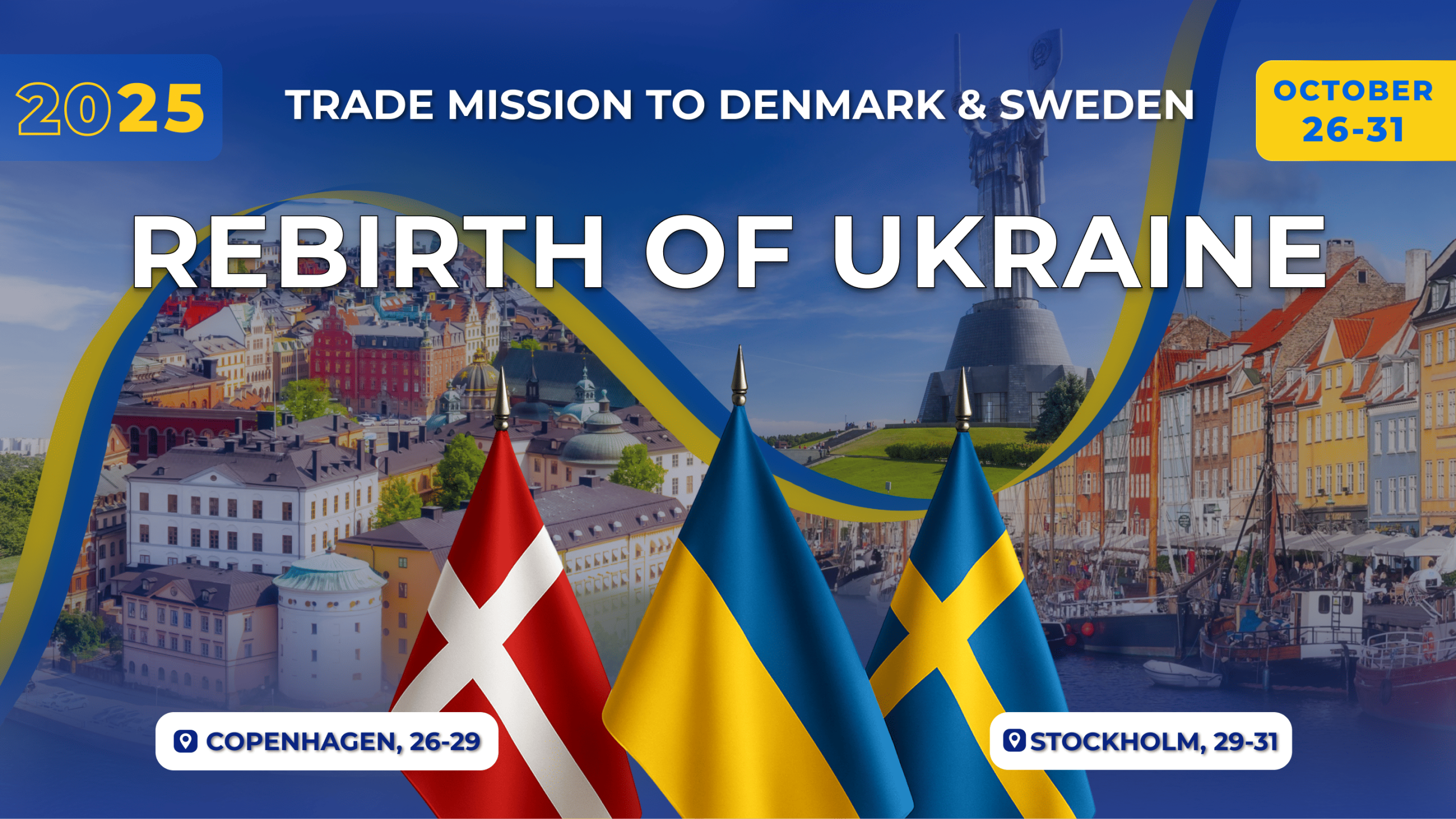
PR_MCOverview of the REBIRTH OF UKRAINE Trade Mission to Denmark and Sweden

At the end of October 2025, the Ukrainian delegation, participating in the REBIRTH OF UKRAINE Trade Mission organized by Economy of Trust Ukraine, the Ukrainian Mayors Club, and Sweco, had the opportunity to explore new promising avenues of cooperation in the fields of reconstruction and reintegration alongside representatives of Northern Europe. The mission became possible thanks to the support of UMEDA, Global Risk Clinic, Finansforeningen/CFA Society Denmark, and Business Sweden, as well as the Regional Development Agencies of Kyiv and Odesa regions, NAZOVNI, the Energy Association “Ukrainian Hydrogen Council,” and the Embassies of Ukraine in Denmark and Sweden.
The strategically important trip began with the Ukrainian-Danish Business Forum on Ukraine’s Economic Recovery, held on October 27 in Copenhagen at the office of partner company Sweco—one of Europe’s leading players in the field of high-tech architectural and engineering solutions. The event was opened by Dariush Rezai, CEO of Sweco Denmark A/S and President of Sweco Group (Central Europe), who emphasized the role of global engineering companies in Ukraine’s reconstruction. The Ambassador of Ukraine to the Kingdom of Denmark, Andrii Yanevskyi, then highlighted the growing interest of the Danish business community in Ukrainian projects. Marie Elizabeth Andersen, Head of the Municipal Cooperation Program between Ukraine and Denmark, concluded the introductory session by stressing the successes of inter-municipal partnerships and their potential in rebuilding Ukrainian communities.
Afterward, Henry Shterenberg, CEO of Economy of Trust Ukraine, presented the concept of the “Economy of Trust”—a new decentralized development model that places the family at the center of the market system and enables transparent interaction between communities, businesses, and citizens. The EoTU platform integrates three key segments: communities, businesses, and projects. A major advantage of the model is the integration of physical and digital infrastructure at the design stage, ensuring full transparency and at least a tenfold reduction in project implementation costs and timelines for international businesses entering Ukraine. The idea was also supported by members of the EoTU Advisory Board—Eva-Lotta Sjöstedt, Lars Pettersson, Mirjana Dimc Perko, and Lars Grenkjær—who moderated panel discussions on energy transformation, sustainable development, and investment instruments for post-war recovery.


One of the forum’s most significant moments was the signing of an official strategic cooperation agreement between Economy of Trust Ukraine and Sweco, marking the start of joint projects in infrastructure, urban development, and industrial parks. Lasse Rajala, Director of International Operations at Sweco Finland, and Kari Nöjd, Project Manager at Sweco Finland, presented a joint platform for industrial parks designed to accelerate the launch of innovative manufacturing and logistics clusters in Ukraine.
After a short break, the presentations by keynote speakers continued. Oleksii Pavlenko, Advisor to the CEO of Nibulon and former Minister of Agrarian Policy of Ukraine, elaborated on the role of Ukraine’s grain export leader in ensuring global food security during wartime. His presentation was complemented by Kenneth Lindharth Madsen, Head of Trade, Markets, and Geopolitics at the Danish Agriculture & Food Council, and Marcus Petersson, Technical Lead at Swegreen, who outlined specifics of Danish-Ukrainian cooperation in the agricultural sector. Yuliia Chufistova, Presidium Member of the Ukrainian Mayors Club and Director of the UMEDA Development Agency, and Anastasiia Hliahina, General Manager of Economy of Trust Ukraine, presented the U_CAN project aimed at supporting communities in achieving climate neutrality in various regions of Ukraine and integrating European environmental standards into the economy.
The section on infrastructure and construction showcased the investment potential, strategic visions, and opportunities of Ukrainian communities across various focus areas. Vitalii Turpitko, Head of Tereshkivska village; Anastasiia Tkachova, Deputy Director of the Infrastructure Department of the Sumy City Council; Maksym Samchyk, Head of Raihorodok community; Andrii Stasiv, Deputy Mayor; Oleksandr Lemeshko, First Deputy Head of the Poltava Regional Council; Vitalii Karabanov, Mayor of Balakliia; Denys Tkachenko, Head of Velykodalnytsia village; and Liudmyla Prokopechko, Mayor of Dobroslav, presented concrete projects in industrial development, logistics, engineering infrastructure, and critical facility reconstruction.
Following their presentations, a large panel discussion took place with the participation of Lasse Rajala; Kari Nöjd; Julius Stenbjørn, Senior Engineer at Sweco Denmark; Camilla Khrulova, Co-Founder of JC Environment; Michael Ramlau Hansen, Chairman of DI Danish Water Industries; and Pavlo Nalyvaiko, Board Member of the Ukrainian Water Association. Experts discussed water infrastructure, sustainable recovery, environmental standards, and integration of European technologies into water-resource management systems for Ukrainian communities.
In the second half of the day, matchmaking sessions offered both Ukrainian delegates and international guests an opportunity to establish nearly two dozen new business contacts open to exploring various forms of partnership.

The next panel discussion, titled “Green Energy and Sustainable Development,” featured speakers Diana Hoicheva, Head of Economic and Investment Department of Artsyz City Council; Maksym Lahodiienko, Mayor of Novyi Buh; and several business representatives, including Maksym Riznychenko, Development Director at ECOFACTOR; Serhii Serniuk, CEO of URD; and Denym Kosoi, CEO of ETL GROUP. Their presentations set the stage for a panel discussion moderated by Lars Petersson. Leading energy experts—including Nicola Dolovski, Partner at EnergyNet; Oleksandr Riepkin, President of the Ukrainian Hydrogen Council; Stefan Gahns, Senior Sales Manager at Siemens Energy AB; Eva Larsen, Head of Public Relations at Vestas; and Oskar Ernst, Advisor at Green Power Denmark—discussed the future of green generation, the hydrogen economy, and innovative models applicable to Ukraine.
Before the final panel on financing and investment, participants learned about financial instruments available to Ukraine from the Danish Export and Investment Fund (EIFO). Peder Larsen, Deputy Director of EIFO, outlined the conditions under which Ukrainian communities and businesses may qualify for financial support. During the panel discussion moderated by Mirjana Dimc Perko, Oleksii Shetsko, COO of SP KBT LLC (EGHOLM A/S), shared his experience working with EIFO and the achievements of his company, which helps communities maintain environmental efficiency even during wartime. Discussions also included risk-management mechanisms, financial guarantees, and investment tools, explored by Michael Jensen, CEO of Global Risk Clinic; Jesper Ilsøe, CEO of Kapital Partner A/S; Lisbeth Ringgaard, Strategic Manager at Nordea; and Viktoria Savytska, Head of International Relations at the Epicenter Group.
The forum concluded with an inspiring presentation by Lars Grønkjær on trust as the foundation of international business. He emphasized that trust is the key prerequisite for successful cooperation among companies, governments, and communities—without it, neither infrastructure, investment, nor energy strategies can turn into real projects.


On November 28, the Ukrainian delegation participated in the Financial Conference “A World at Risk (WaR) – Finanskonferencen 2025,” dedicated to new investment models and the role of the private sector in sustainable economic growth. Among the key speakers was Henry Shterenberg, who outlined Ukraine’s strategic role in the modern geopolitical landscape and emphasized that today the country has a unique opportunity to build a new, transparent, and efficient economy focused on community development and strengthening international trust.
That same day, the participants visited Water Innovation Europe 2025, a leading European platform discussing innovations in water management and the circular economy. Denmark’s experience proved highly valuable for Ukrainian communities planning to modernize local water infrastructure and introduce cutting-edge technologies.
Around midday, the delegation visited State of Green, the national showroom of sustainable technologies, which demonstrated how cooperation between government, business, and communities can create comprehensive solutions in energy, waste management, and climate action.


The delegation then met with Lars Weiss, Lord Mayor of Copenhagen, and Jens-Kristian Lütken, Mayor for Employment and Integration. The discussions focused on job creation, integration of new residents, inclusive urban policy, and Denmark’s experience in strengthening social cohesion-providing Ukrainian representatives with a practical example of how communities can simultaneously foster economic growth and social stability.
The day concluded with a tour of the Amager Bakke plant—one of the world’s most efficient waste-to-energy facilities. Its uniqueness lies in combining industrial technologies with public space: the plant’s rooftop serves as a recreational zone and even a ski slope, symbolizing how innovation can transform the face of a modern city.

On November 29, the delegation traveled to Stockholm and the next day took part in the Ukrainian-Swedish Business Forum on Ukraine’s Economic Recovery. This event served as the second major component of the trade mission, creating a platform to strengthen economic and investment ties between Ukraine and Sweden. The forum opened with remarks from Jonas Berggren, Chief Analyst at the Confederation of Swedish Enterprise, followed by Henry Shterenberg, who outlined Economy of Trust Ukraine’s strategic vision of developing Ukraine as a reliable economic partner for all of Europe.


Then Tina Karlberg, President of Sweco International, presented the concept of “green cities,” which can be adapted for Ukrainian communities during reconstruction. She stressed Sweco’s readiness to share its expertise in designing environmentally friendly and energy-independent districts, enabling Ukraine to begin building next-generation cities today.
The infrastructure and construction section highlighted the primary needs of Ukrainian communities in industrial and civil infrastructure, waste management, water supply, and energy. Presentations by Ukrainian delegates showcased a wide array of innovative projects already prepared for phased implementation. A panel discussion with Lasse Rajala, Kari Nöjd, Henrik Enstrom (Founder of Skandinavisk Termoekonomi), and Pavlo Nalyvaiko provided deeper insights into Ukraine’s infrastructure development prospects and foreign investment opportunities.


An especially noteworthy presentation came from Jonas Birgersson, Head of the EnergyNet Task Force, during the session on green energy and sustainable development. He drew an analogy with the evolution of digital technologies, proposing to rebuild the outdated energy system following principles of the modern internet, where flexibility and decentralization prevail. His model envisions the creation of local energy networks capable of operating autonomously from the main system. These ideas were further discussed during a panel session featuring Yaroslav Kryl, Director of “Hydrogen of Ukraine”; Anton Johansson, Director of the Analytical Department at Green Power Sweden; and Stefan Gahns.
The financing and investment section became a platform for shifting from dialogue to practical mechanisms for attracting foreign investment. Participants heard expert insights from Anna Flock Hedin, representative of the Swedish Client Executive Unit of the International Bank EKN; Linda Ryden, Trade Consultant at Open Trade Gate Sweden; Maria Stridsman, Department Director at SIDA; Sophie Taintor, Senior Manager at Swedfund International AB; Maher Chebbo, Co-Founder of SAP INSPIRE; Matthew Doerner, CEO of Achilles Capital; Ragnar Hörndahl, Senior Public Relations Manager at Nordea; and Viktoria Savytska. Oleksii Pavlenko then highlighted the global significance of Ukraine’s agricultural sector.


The forum concluded with remarks by Svitlana Zalishchuk, Ambassador Extraordinary and Plenipotentiary of Ukraine to Sweden, and the premiere of the documentary The Grain Capital of Ukraine, which tells the story of Oleksii Vadaturskyi, founder of Nibulon, and the role of Ukrainian business in maintaining global food security during the war.


The next day at the Sweco Sweden headquarters, practical workshops were held where Ukrainian communities, together with leading Sweco experts, worked on real-case scenarios in the fields of infrastructure and urban planning, energy and waste management, and healthcare. These workshops provided participants with concrete recommendations for future projects and laid the groundwork for their implementation in partnership with Sweco. We would like to express our special gratitude to the members of the EoTU Advisory Board, who excellently moderated all workshops – Eva-Lotta Sjöstedt, Lars Petersson, Mirjana D. Perko, and Lars Grønkjær.
The mission concluded with a visit to the Sollentunavallen sports arena, which features one of Sweden’s most efficient energy-saving systems.
In summary, the REBIRTH OF UKRAINE Trade mission to Denmark and Sweden opened new opportunities for joint projects in water infrastructure, energy efficiency, urban development, and digital transformation. This strategic journey demonstrated that international cooperation based on trust, innovation, and mutual respect is the key to Ukraine’s sustainable recovery and its integration into the shared European space.