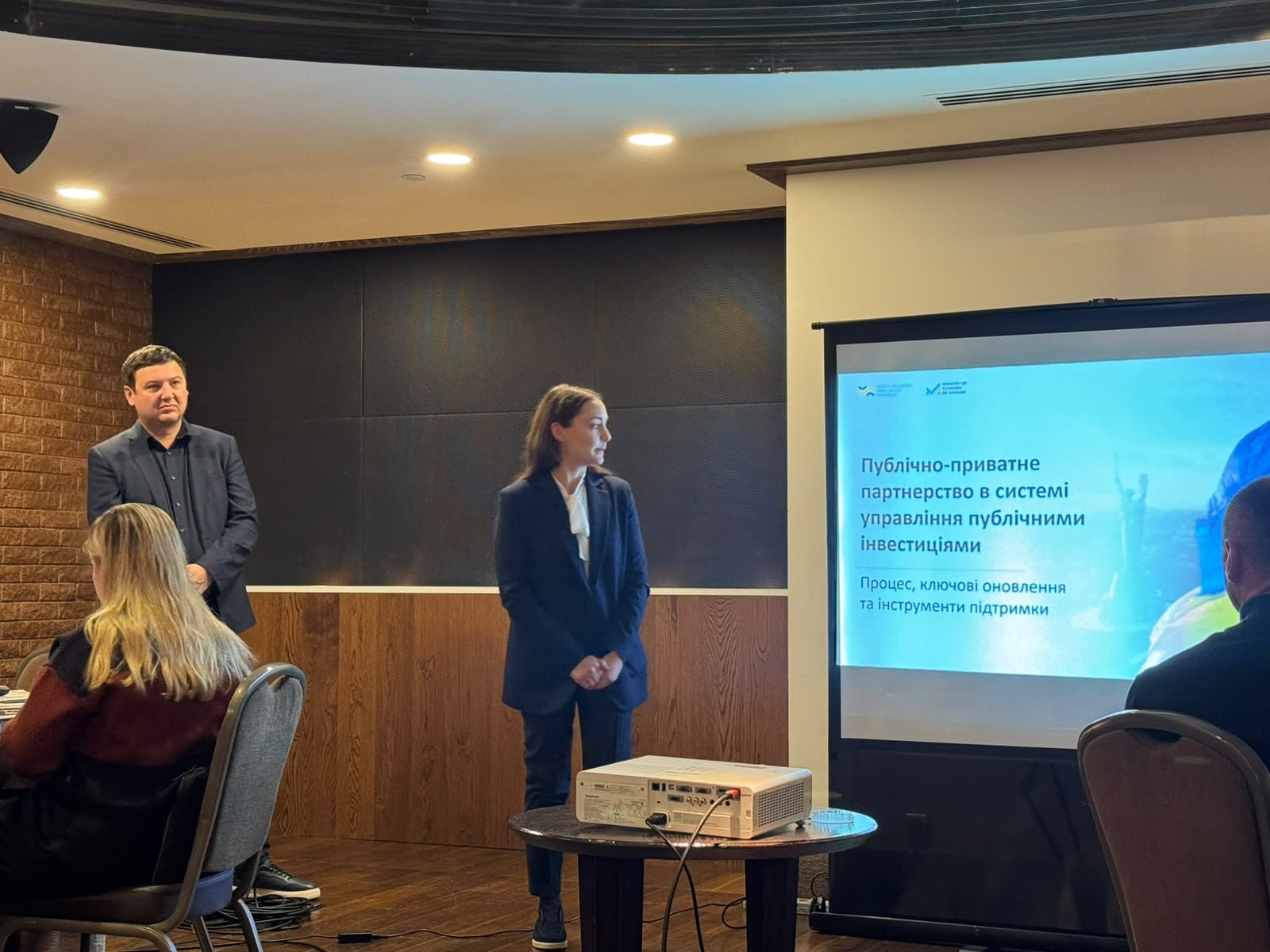
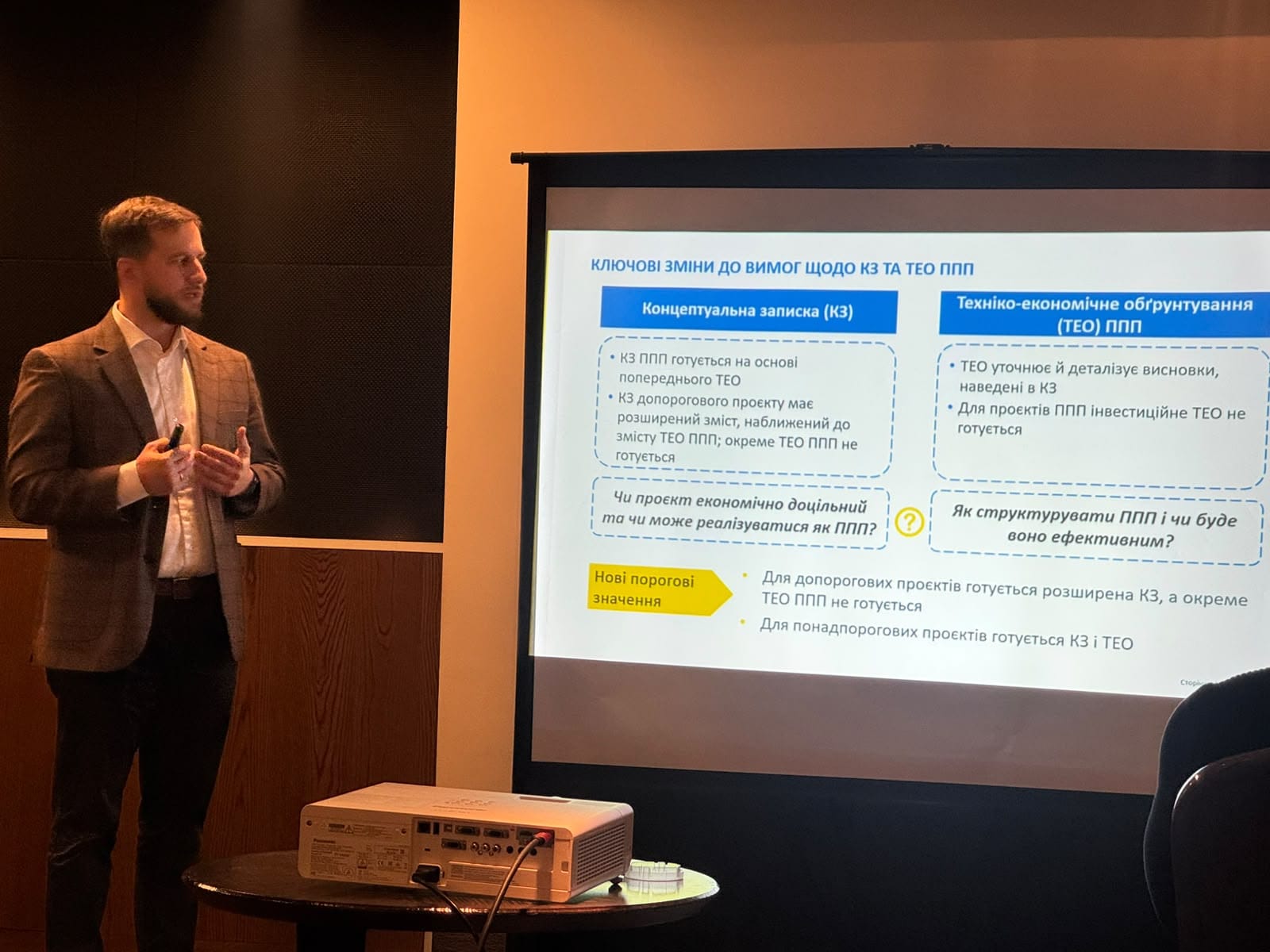
On 26 October 2026, Yuliya Chufistova, a member of the Presidium of the Mayors’ Club Ukraine, participated in the roundtable «Developing PPPs and Project Preparation Programmes», organised by the Public-Private Partnership Agency of Ukraine. Participants discussed the updated regulatory framework for public-private partnerships (PPPs), training materials developed by the UG PPF team, and what is needed to help communities move from implementing individual initiatives to systematically preparing PPP projects.
The roundtable was opened by Anna Artemenko, Deputy Minister of Economy and Environment of Ukraine. The introductory session focused on key changes to PPP legislation and their practical implications for local self-government bodies. PPPs are now integrated into the public investment management system, meaning that projects must go through a sequence of preparation stages: a preliminary feasibility study (pre-feasibility study), including a sectoral assessment; identification of the potential for a PPP (determining whether this mechanism is suitable for a specific project); and only then a full feasibility study. Furthermore, project development should not begin with the search for financing, but with clear answers to three key questions: What problem does the project address? Is the proposed solution the most effective option? And does the public partner have the capacity to meet its obligations over the long term?
The Public-Private Partnership Agency of Ukraine and UG PPF teams presented new PPP training materials that qualified trainers will use to educate representatives of public authorities and local communities. The materials also explain the role of the private partner, who contributes its own financing, assumes specified risks, and bears long-term responsibility for the project’s outcomes. The key message for trainers was clear: PPPs should not be selected in advance as the preferred implementation mechanism. Instead, projects should first be assessed in terms of alternative delivery options, fiscal affordability (whether the public partner can meet the project’s financial obligations), risk allocation, market interest, and the capacity of the public partner. The discussion also covered Project Preparation Facilities (PPFs), which can support municipal projects at various stages of preparation.